
Seafood Market
Open Wednesday-Sunday 10am – 7pm
Closed Monday & Tuesday
The Seafood Market carries a variety of products which vary daily, but below is an idea of our selection
Local Blue Crab, Live Local Hardshell Clams, Local Pompano, Local Florida Lobster, Local Flounder, a variety of Grouper and Snapper Species, Local Mahi Mahi, Live Maine Lobster, Monkfish, Live Oysters, Local Swordfish, Squid, Chilean Seabass, Local Golden Tilefish, Tuna (Yellowfin, Big Eye, Albacore) Local Wahoo, Local King and Spanish Mackerel, Fresh Salmon, Whole Octopus, Fresh U-10 Scallops, Rock Shrimp Tails, Canaveral White Shrimp, and Royal Red Shrimp.


We also carry prepared items such as crab cakes, pints of shucked oysters and Seafood Atlantic’s ‘Never from a Can’ Tuna Salad

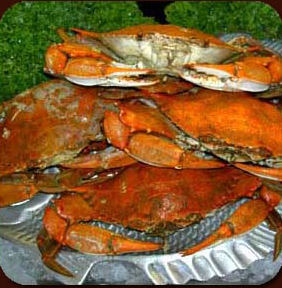
Florida Blue Crab
Florida Blue Crab is prey for Florida Fish, wild life and hungry Floridians. Available from local waters. We carry pints of lump claw or clean cocktail claw meat. Seasonably available live with an average yield of 15% edible meat. Blue Crabs are extremely high in vitamin B12 with just 3 ounces of crab filling your daily allowance.
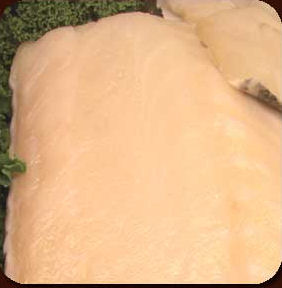
Chilean Sea Bass
Chilean Sea Bass Also known as Pategonian Tooth Fish. Chilean Sea Bass is imported only being found in the cold deep waters of the southern hemisphere. High in Omega 3 and when throughougly cooked has a tender texture. Well suited to dry cooking methods such as broiling, sauteeing and grilling.
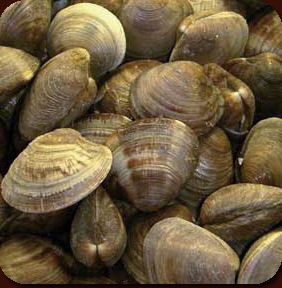
Clams
Clams live out their lives buried in the sand collecting plankton from the water. They do not swim from place to place like scallops. If you find an open clam prior to cooking tap on the shell if it does not close discard it. Soak steamer clams for several hours in salt water with 1 cup of corn meal. Use kosher or sea salt as the iodine is regular salt will kill the clams. We carry Pasta Clams, Little Neck Clams, Middle Neck Clams, Top Neck Clams and Chowder Clams.
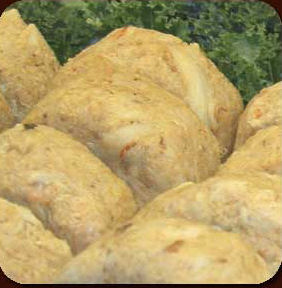
Crab Cakes
Crab Cakes made with 98% crabmeat and sold for light frying or baking. This is a customer favorite and the reason many loyal patrons drive the distance to the waterfront.
Make a simple sandwich with remoulade sauce, lettuce and tomato or as the centerpiece in a salad.
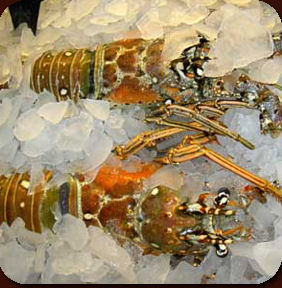
Florida Lobster
Florida Lobster available year round frozen and fresh when the season starts in August until March 31st.
Lobster Meat is very delicate and will cook quickly. When it loses its translucence and becomes opaque throughout, remove from heat. Florida Lobster also known as Spiny Lobster can be boiled, steamed, grilled, deep fried or broiled. The meat can be removed from the tail and used in many recipes.
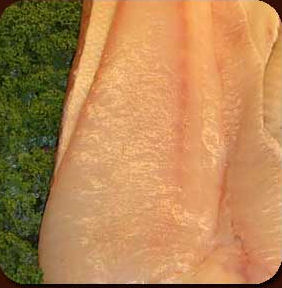
Flounder
Flounder caught in the Banana River, Mosquito Lagoon, and offshore in the Ocean. Our Divers catch Flounder in ocean depths of up to 160 feet. Notable for its unusual anatomy with two eyes on one side of its head. The flounder starts its life looking very much like other fish, as it matures one eye will migrate to the other side of the head. This gives the fish the advantage of being able to see with both eyes camoflaged while laying flat on the sea bed floor. Local Flounder is a light and mild fish delicious fried, baked, stuffed or broiled.
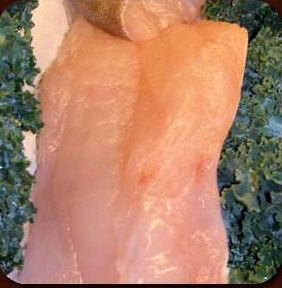
Grouper
Groupers are not built for long distance fast swimming preferring to lie and wait rather thanpursue fish, octopus, lobster or crab. The grouper has a powerful mouth and gillsthat can create a vacuum to suck prey in swallowed whole rather than bitten. Consequently, the cheeks of the grouper are a unique piece of meat unlike a fillet. All varieties of grouper can be prepared by baking, broiling ,grilling, stewing, frying or blackened.
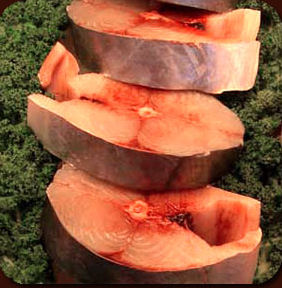
Mackerel
Mackerel are schooling fish that migrate from South Florida waters in the winter to more northernly waters in the spring. Gulf populations are thought to be seperate from Atlantic populations with considerable mixing in the winter from Cape Canaveral passed Key West. King and Spanish Mackerel are both flavorful fish high in Omega 3 and Vitamin E. They are best prepared by broiling, frying, baking or by smoking.
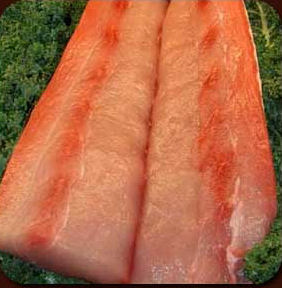
Mahi Mahi
Mahi Mahi is caught in all ofthe Worlds Oceans. Available locally most of the year. Mahi Mahi is also a trophy fish because of its brilliant coloring and size. The fish changes color when it is under stress. Mahi Mahi also known as Dolphin hunt as a team. A well liked fish for grilling its mild taste and firm texture can accommodate most seasonings. Frequently served in finer restaurants.
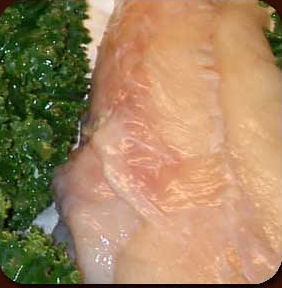
Monkfish
Monkfish the master of disguise, also known as Goosefish, can change it’s color to match its surroundings. Monkfish spend their lives on the ocean floor where it waits to ambush prey. Articulated fins perform the functions of feet enabling the Monkfish to “walk” on the bottom of the sea. Not especially pretty as a fillet or a fish this fish is also known as Poor Mans Lobster because of it’s similar taste and texture to the Lobster.
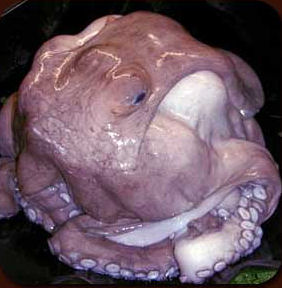
Octopus
The Octopus catches crabs, crayfish and mollusks by stealth. It can change it’s body color and texture so perfectly that it virtually disappears. The well camoflaged octopus waits for prey to pass by then seizes it with it’s long arms. Excellent fried, marinated, in sushi dishes or sauteed in pasta.
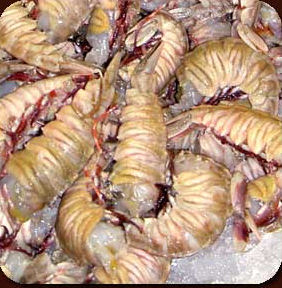
Rock Shrimp
Rock Shrimp – Due to the tough rigid exo-skeleton the rock shrimp didn’t have the marketability of the pink, brown and white shrimp. In the 1980’s a machine was invented that would split the shell and devien the shrimp. Taste and texture is similar to a cross between white shrimp and lobster. Rock Shrimp cook much faster then regular shrimp so be careful not to overcook. Rock Shrimp are good broiled, to top a salad or in a dip.
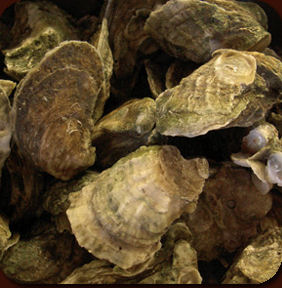
Oysters
Oysters as with all mollusks if the shell does not close when you tap on it discard it. Folklore states that Oysters should only be eaten in months containing an “R”. This may have originated in the days when oysters were shipped without adequete refridgeration and could spoil. Today oysters can be eaten all year round. Available in pints, by the dozen or by the box. Oysters are served raw, steamed,fried,smoked,in holiday stuffing and sauces.
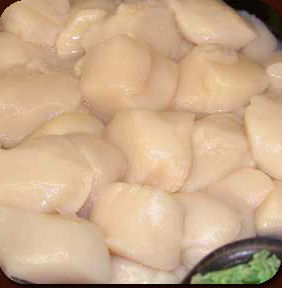
Sea Scallops
Sea Scallops best known for its distinctive shell, scallops are processed onboard ships because out of the water they die quickly. Scallops maybe broiled, kabobed, stir fried, baked or even microwaved. Always take care not to overcook, scallops are done as soon as they lose their translucense and become opaque but before they toughen. If you plan to cookthem in a sauce cook seperately.
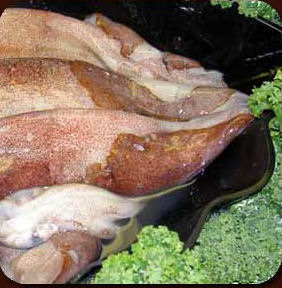
Squid
Squid change color to frighten predators blend into their environment and possibly to communicate with each other. Giant Squid can be over 100 feet long. Squid is infinitely delicious and easy to prepare. Clean the squid by cutting off the tenacles close to the beak, brush off cartlidge from tenacles and remove the strip of cartilage and the inards from the head. This part is cut laterally and used to make Calamari rings. May also be blanched to remove skin.
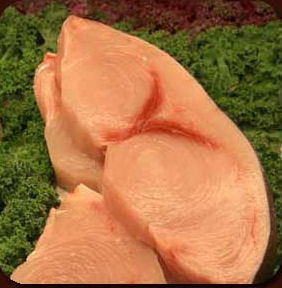
Swordfish
Swordfish species swim worldwide in temperate and tropical waters. They are known to frequent depths of 400-500 fathoms, but also bask on the surface. Large Swordfish are always females, males seldom exceed 200 lbs. Females are believed to prefer water cooler then that favored by males. Swordfish feed on squid, octopus, and pelagic fishes of all kinds. Typically grilled and also good broiled.
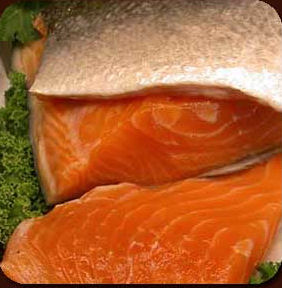
Salmon
Salmon is not found locally but readily available. Folklore has it that salmon return to the exact same spot that they were born to spawn and modern research shows that usually atleast 90% return to the same area. The Ainu in Northern Japan taught dogs how to catch Salmon as they returned to their breeding grounds in masse.
Salmon is a good source of Omega 3, best broiled or smoked. Delicious with Teryaki flavors and green onions.
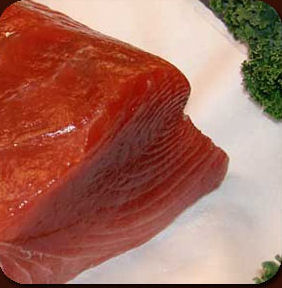
Tuna
Tuna fish have the ability to lower their body temperature to their environment and can swim over 60 mph. Our fleet follows the Tuna’s seasonal migration fishing east and north of Cape Canaveral during the fall/winter months (when the fish are high in fat content) and in the summer travel to the Mid and North Atlantic. Firm and flavorful a versitile fish used for anything from sushi to grilling. We carry Yellow Fin.
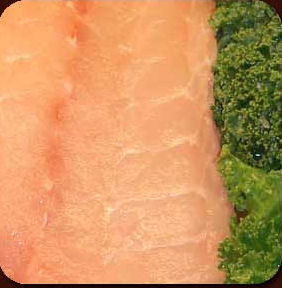
Tilefish
Tilefish is a deep water fish that sleeps in underwater caves, seeks shelter in self made burrows and caves at the bases of reefs or piles of rock often in canyons or the edge of steep slopes. Tilefish are active fish and keep to themselves, generally staying at or near the bottom. They have a light almost sweet taste that has been compared to scallops and lobster.
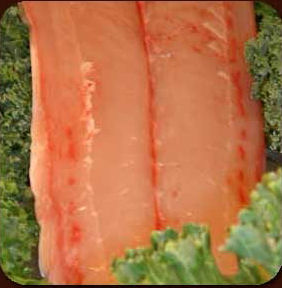
Wahoo
Wahoo also is known as “Ono’ after the Hawaiin word for “good to eat”. Wahoo are closely related to Mackerel and spend their time around shipwrecks, underwater cliffs, weed lines or ledges. Because the Wahoo is a low-fat fish it is beneficial to marinate or poach to prevent drying out.